변분 알고리즘은 알고리즘적, 소프트웨어적, 하드웨어적 발전에 따라 결합하고 최적화할 수 있는 여러 모듈식 구성 요소로 이루어져 있습니다. 여기에는 일련의 매개변수로 특정 문제를 기술하는 비용 함수, 이러한 매개변수로 탐색 공간을 표현하는 ansatz, 그리고 탐색 공간을 반복적으로 탐색하는 옵티마이저가 포함됩니다. 각 반복 단계에서 옵티마이저는 현재 매개변수로 비용 함수를 평가하고, 최적 해에 수렴할 때까지 다음 반복에서 사용할 매개변수를 선택합니다. 이 알고리즘 계열의 하이브리드적 특성은, 비용 함수가 양자 자원을 통해 평가되고 고전 자원을 통해 최적화된다는 사실에서 비롯됩니다.
문제 초기화: 변분 알고리즘은 양자 컴퓨터를 기본 상태∣0⟩로 초기화한 뒤, 이를 우리가 _참조 상태_라고 부를 원하는 (매개변수화되지 않은) 상태 ∣ρ⟩로 변환하는 것으로 시작됩니다.
이 변환은 기본 상태에 유니타리 참조 연산자 UR을 적용하는 것으로 표현되며, UR∣0⟩=∣ρ⟩을 만족합니다.
Ansatz 준비: 기본 상태 ∣0⟩에서 목표 상태 ∣ψ(θ)⟩로 반복적으로 최적화하기 시작하려면, 변분 알고리즘이 탐색할 매개변수화된 상태들의 집합을 나타내는 변분 형식UV(θ)를 정의해야 합니다.
참조 상태와 변분 형식의 특정 조합을 ansatz라고 부르며, UA(θ):=UV(θ)UR로 정의됩니다. Ansatz는 궁극적으로 기본 상태 ∣0⟩을 목표 상태 ∣ψ(θ)⟩로 변환할 수 있는 매개변수화된 양자 Circuit의 형태를 띠게 됩니다.
비용 함수 평가: 우리는 문제를 Pauli 연산자의 선형 결합으로 표현된 비용 함수C(θ)로 인코딩하여 양자 시스템에서 실행할 수 있습니다. 이는 에너지나 스핀과 같은 물리계에 대한 정보일 수도 있지만, 물리적이지 않은 문제를 인코딩할 수도 있습니다. 비용 함수를 평가하는 동안 IBM Quantum 프리미티브를 활용하여 오류 억제와 완화를 통해 잡음에 대응할 수 있습니다.
매개변수 최적화: 평가 결과는 고전 컴퓨터로 전달되고, 고전 옵티마이저가 이를 분석하여 변분 매개변수의 다음 값 집합을 선택합니다. 기존에 알려진 최적해가 있다면 이를 초기점θ0으로 설정하여 최적화를 부트스트랩할 수 있습니다. 이러한 초기 상태∣ψ(θ0)⟩를 사용하면 옵티마이저가 유효한 해를 더 빨리 찾는 데 도움이 될 수 있습니다.
결과를 바탕으로 ansatz 매개변수를 조정하고 재실행: 고전 옵티마이저의 종료 기준이 충족될 때까지 전체 과정이 반복되며, 최적의 매개변수 값 집합 θ∗이 반환됩니다. 그러면 문제에 대해 제안되는 해 상태는 ∣ψ(θ∗)⟩=UA(θ∗)∣0⟩이 됩니다.
양자역학에서 에너지는 보통 _Hamiltonian_이라 불리는 양자 관측량의 형태로 나타나며, 이를 H^로 표기합니다. 그 스펙트럼 분해를 다음과 같이 살펴봅시다.
H^=k=0∑N−1λk∣ϕk⟩⟨ϕk∣
여기서 N은 상태 공간의 차원, λk는 k-번째 고윳값(물리적으로는 k-번째 에너지 준위), 그리고 ∣ϕk⟩는 이에 대응되는 고유 상태이며, H^∣ϕk⟩=λk∣ϕk⟩을 만족합니다. (정규화된) 상태 ∣ψ⟩에 있는 시스템의 기댓값 에너지는 다음과 같이 계산됩니다.
{∣ϕk⟩}k=0N−1이 정규직교 기저이므로, ∣ϕk⟩을 측정할 확률은 pk=∣⟨ψ∣ϕk⟩∣2이고, 모든 확률의 합은 ∑k=0N−1∣⟨ψ∣ϕk⟩∣2=∑k=0N−1pk=1을 만족합니다. 요컨대, 임의의 시스템의 기댓값 에너지는 최저 에너지, 즉 바닥 상태 에너지보다 높거나 같습니다.
⟨ψ∣H^∣ψ⟩≥λ0.
위의 논증은 임의의 유효한 (정규화된) 양자 상태 ∣ψ⟩에 적용되므로, 매개변수 벡터 θ에 의존하는 매개변수화된 상태 ∣ψ(θ)⟩를 고려하는 것도 얼마든지 가능합니다. 바로 이 지점에서 "변분"이라는 표현이 등장합니다. C(θ):=⟨ψ(θ)∣H^∣ψ(θ)⟩로 주어지는 비용 함수를 고려하여 이를 최소화하고자 한다면, 그 최솟값은 언제나 다음을 만족합니다.
θminC(θ)=θmin⟨ψ(θ)∣H^∣ψ(θ)⟩≥λ0.
C(θ)의 최솟값은 매개변수화된 상태 ∣ψ(θ)⟩를 사용하여 λ0에 가장 가깝게 접근할 수 있는 값이며, 등호는 오직 ∣ψ(θ∗)⟩=∣ϕ0⟩을 만족하는 매개변수 벡터 θ∗가 존재하는 경우에만 성립합니다.
양자 시스템의 (정규화된) 상태 ∣ψ⟩가 매개변수 벡터 θ에 의존한다면, 바닥 상태(즉, 최소 고윳값 λ0을 갖는 고유 상태 ∣ϕ0⟩)의 최적 근사는 Hamiltonian H^의 기댓값을 최소화하는 것입니다.
⟨H^⟩(θ):=⟨ψ(θ)∣H^∣ψ(θ)⟩≥λ0
변분 정리가 에너지 최솟값을 기준으로 서술되는 까닭은, 이 정리가 다음과 같은 몇 가지 수학적 가정을 포함하기 때문입니다.
물리적 이유로, N→∞인 경우에도 에너지에 유한한 하한 E≥λ0>−∞가 존재해야 합니다.
상한은 일반적으로 존재하지 않습니다.
그러나 수학적으로 보면, 이러한 가정 외에 Hamiltonian H^가 특별한 점은 없으므로, 같은 제약을 따른다면 이 정리는 다른 양자 관측량과 그 고유 상태로 일반화할 수 있습니다. 또한, 유한한 상한이 존재한다면, 하한을 상한으로 바꾸어 고윳값을 최대화하는 경우에도 동일한 수학적 논증을 적용할 수 있음을 유의해 주세요.
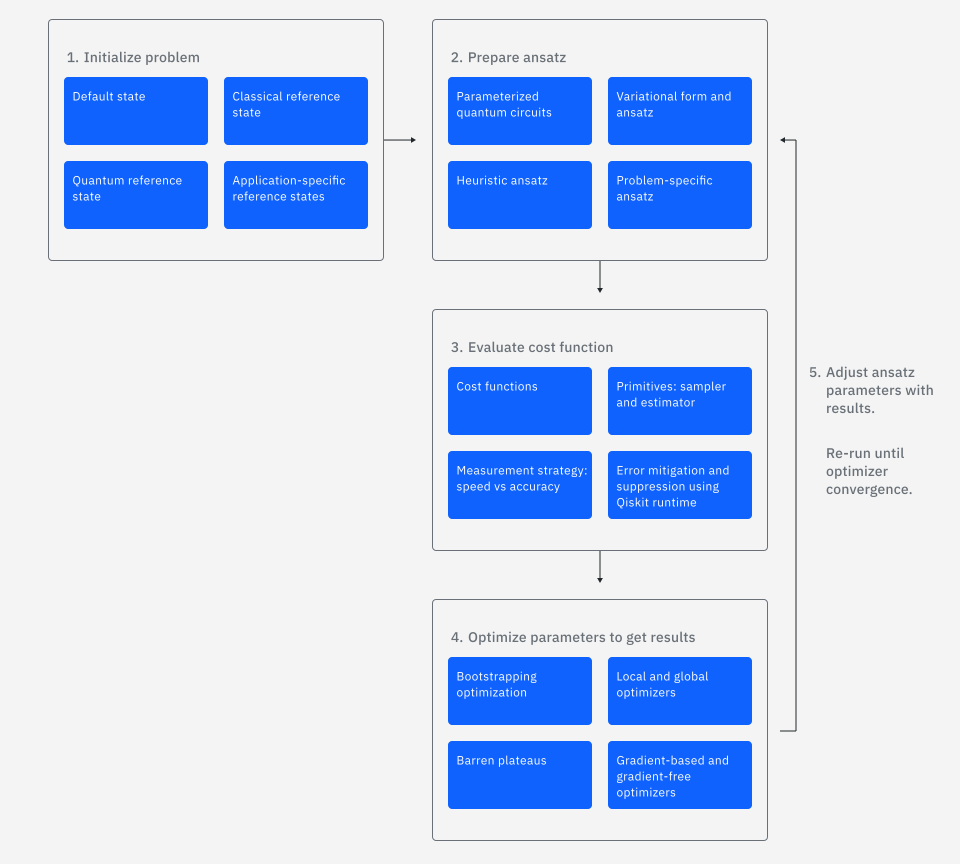 변분 알고리즘은 알고리즘적, 소프트웨어적, 하드웨어적 발전에 따라 결합하고 최적화할 수 있는 여러 모듈식 구성 요소로 이루어져 있습니다. 여기에는 일련의 매개변수로 특정 문제를 기술하는 비용 함수, 이러한 매개변수로 탐색 공간을 표현하는 ansatz, 그리고 탐색 공간을 반복적으로 탐색하는 옵티마이저가 포함됩니다. 각 반복 단계에서 옵티마이저는 현재 매개변수로 비용 함수를 평가하고, 최적 해에 수렴할 때까지 다음 반복에서 사용할 매개변수를 선택합니다. 이 알고리즘 계열의 하이브리드적 특성은, 비용 함수가 양자 자원을 통해 평가되고 고전 자원을 통해 최적화된다는 사실에서 비롯됩니다.